Into the Cave
Thoughts on long-form revision.
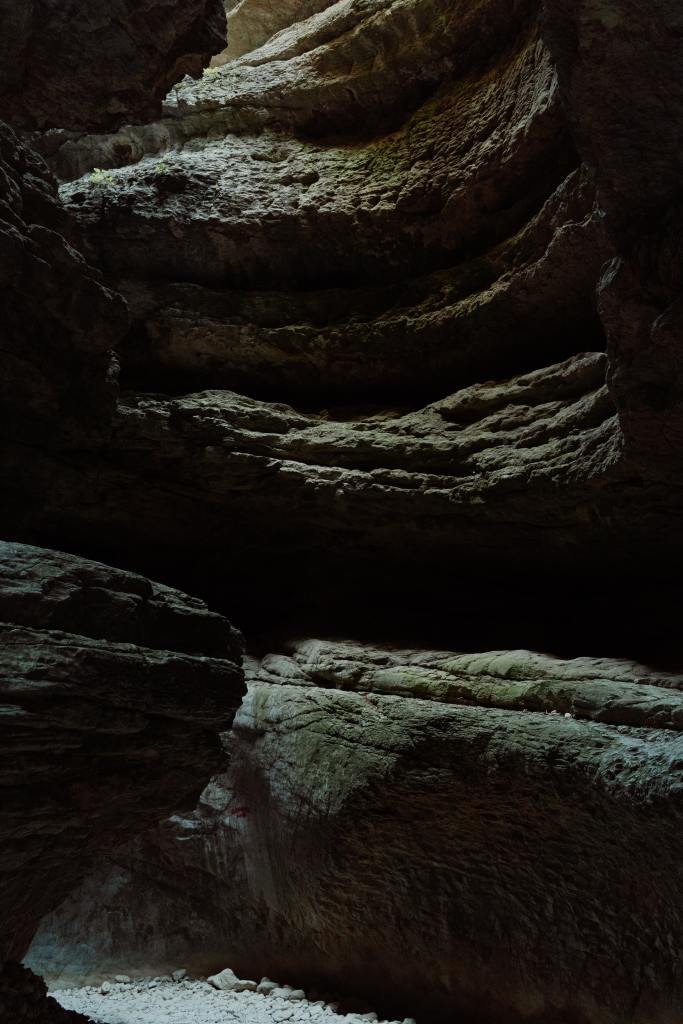
Writers are inventors of emotionally charged spaces who tend to forge ahead through stories, through caves where few have ventured and with only our pitiful headlamps, our senses to feel the way forward. We are also our own pack mules, sorting and gathering the supplies we think we will need for each potential pitfall. Creators invent; managers organize. One side is beautiful and sloppy and filled with false-starts, wrong-turns, and wondrous discoveries, and the other is ordered and time-oriented and loaded down with liability clauses, editorial notes, and marketing plans. While the Creator needs the freedom to follow the whispers in the dark, she can’t be bothered to map the way ahead and home. She needs the Manager to pay attention to the tasks she can’t take in when she’s following her lead.
But what happens when you wind your way to the end of the story you’ve pantsed your way through from the start? How do you re-envision the enormity of all those decisions you’ve made over the course of this trip you started so long ago? If story is the process of change and the writers are following said changes from one moment to the next, does the mere act of engaging in this chase changes the storytellers too? I would argue that yes indeed, the act of working through the first draft can’t help but transform us, which is why revision becomes the blessing that feels like a curse.
I’ve spent most of the last academic year thinking about strategies I could try to inch my work-in-progress (WIP) a little bit closer to its best version, and while structure was my main concern in my last go-round, the biggest problem at the moment is the plot. It’s not that there isn’t a plot, exactly, but rather there’s a stuck point about where to start and where to land. This, then leads to questions of stakes and of tensioning points, which of course elbows into character arcs, and then backs into structure, and to be honest, I am not who I was when I started following this theme. The process of trying to write this literary fiction novel has changed how I see the story and how I see writing, and I think that’s the best part of this long process, re-seeing the work with wiser eyes and grayer hair.
I also did what I always do when I’m stuck: I call on the Manager to do some research. This time, I wanted his help with fixing the plot. I’ll be sharing a list of resources I am using to build my revision arsenal as I throw us back down into that cave system. I am hoping some of what we found can shed more light.
 The Dog Days Writer